
In 2011, a $10 million jury verdict against a trucking company was a shocking headline. Today, it barely makes the news. Jury awards of $20 million, $50 million, and even $100 million or more are now part of the trucking industry’s new reality. These are called nuclear verdicts, and they are changing how fleets think about liability, safety, and the stakes of every mile driven.
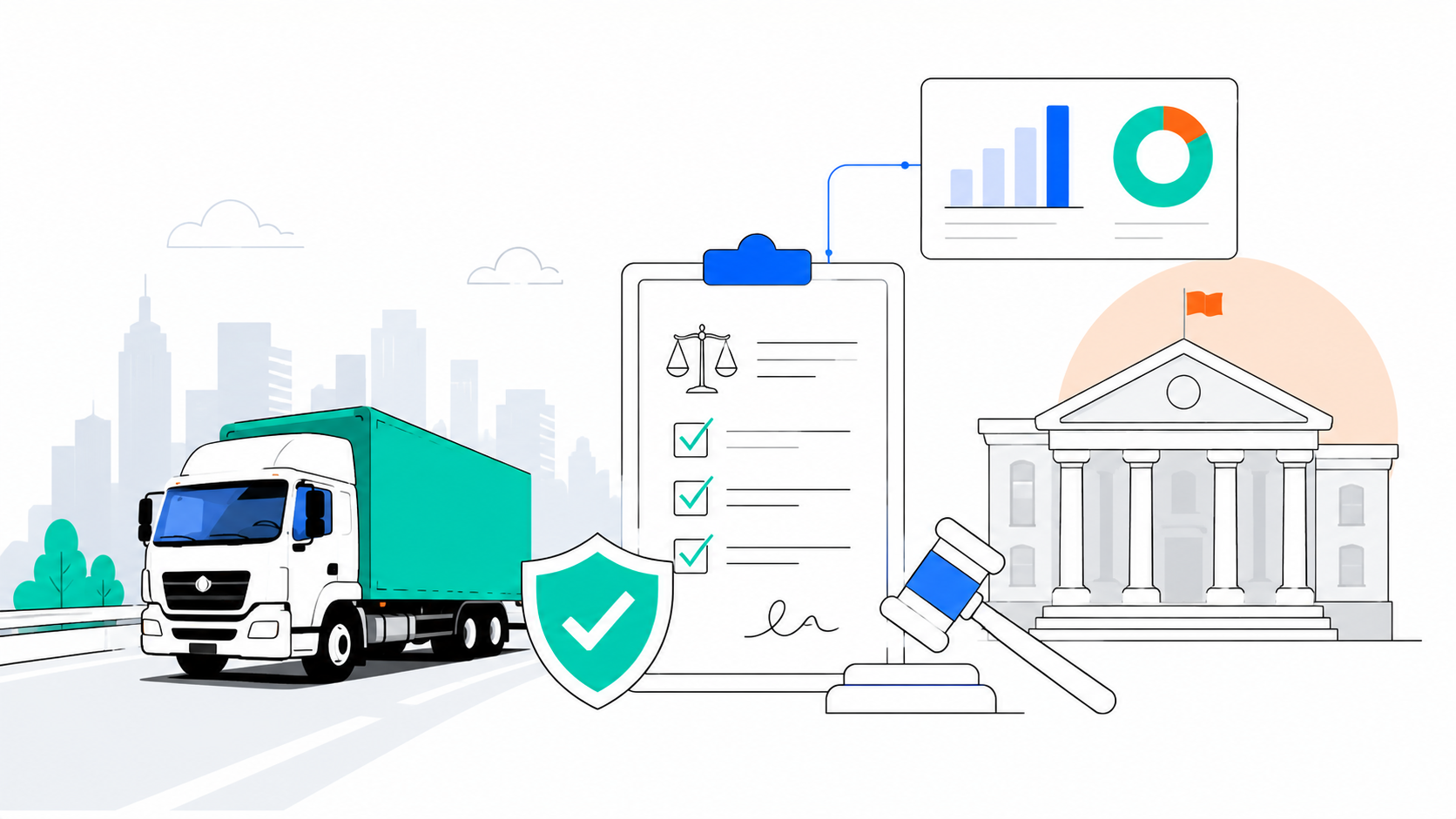
For fleet managers, the risk is no longer theoretical. A single crash, one missed coaching opportunity, or a lapse in policy enforcement can become the centerpiece of a lawsuit that threatens the survival of the business. The good news is that the same data plaintiff attorneys use to build their case can also be used to defend it. Fleets that invest in AI dash cams, structured coaching programs, and defensible safety records are giving themselves a real fighting chance.
What Is a Nuclear Verdict in Trucking?
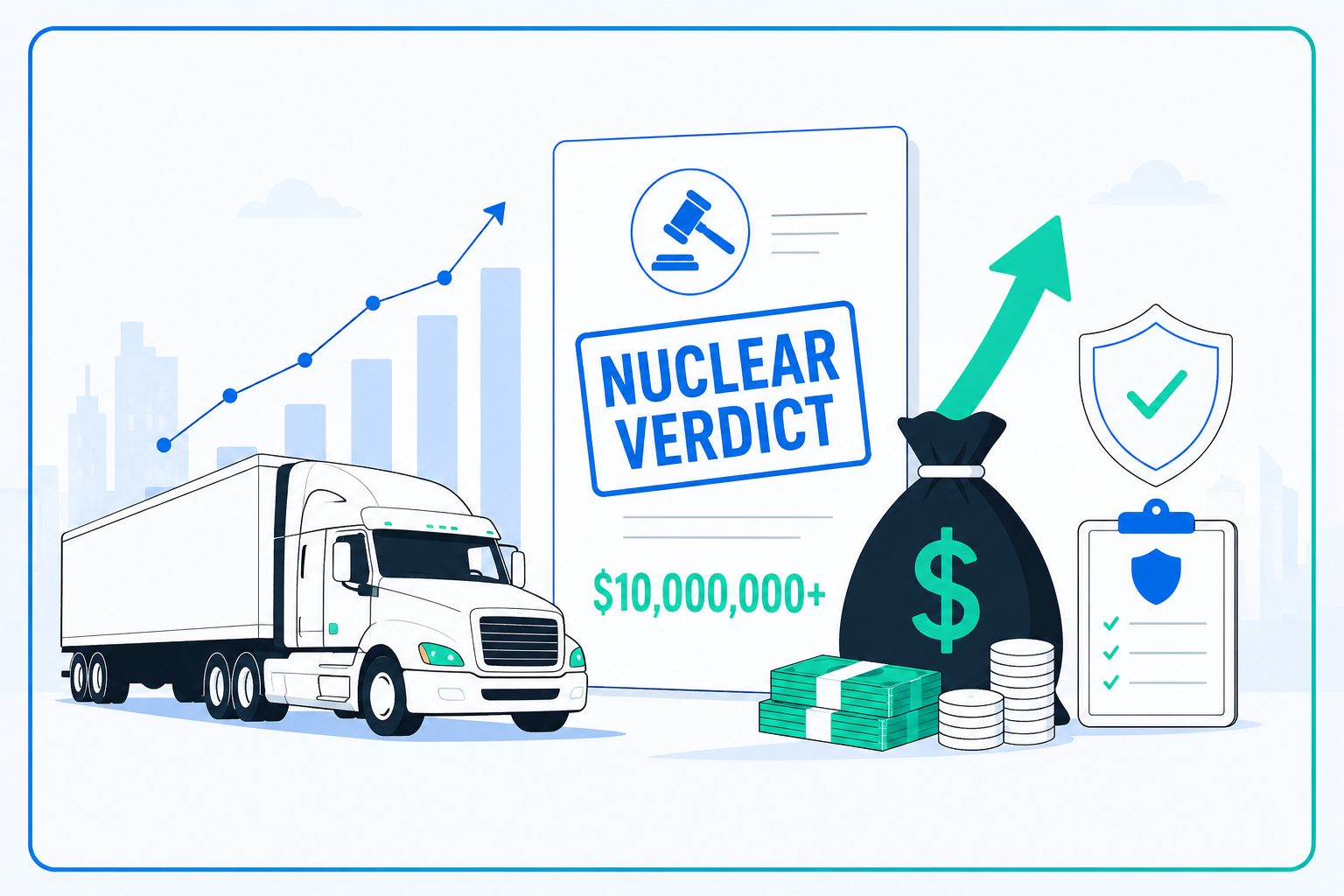
A nuclear verdict is any jury award of $10 million or more. In trucking, these verdicts have climbed sharply over the past decade. According to the American Transportation Research Institute (ATRI), the average size of verdicts over $1 million in the trucking industry grew by nearly 1,000% between 2010 and 2018. Verdicts exceeding $100 million, once rare, are appearing with increasing frequency.
The cost doesn’t stop at the headline number. Even when cases settle before trial, the threat of a nuclear verdict drives up the value of every trucking accident settlement. Insurance premiums rise. Self-insured retention limits climb. Some carriers, particularly smaller and mid-sized fleets, have been forced out of business entirely after a single catastrophic loss.
Why Nuclear Verdicts Are Rising So Fast
Several forces are driving the rise of nuclear verdicts in trucking, and none of them are slowing down.
Social Inflation and Changing Jury Attitudes
Juries today are more willing than ever to assign blame to corporations, especially large ones. Public attitudes toward big business have hardened, and jurors often see trucking companies as faceless entities with deep pockets. This shift, often called social inflation, means that damages for pain, suffering, and punitive reasons keep climbing even when underlying case facts remain similar to cases from a decade ago.
The Reptile Theory
Plaintiff attorneys have adopted a trial strategy known as the reptile theory. Instead of framing a trucking lawsuit as a narrow dispute between two parties, they frame it as a matter of community safety. The goal is to make jurors feel that the fleet’s actions threatened not just the victim but everyone on the road, including the jurors themselves and their families. This approach has been remarkably effective at driving up awards.
Third-Party Litigation Funding
Third-party litigation funding has expanded the resources available to some plaintiff firms, enabling longer and more complex litigation strategies. This funding gives plaintiff firms the resources to drag cases out, hire expert witnesses, and reject reasonable settlement offers, all while pushing for the biggest possible payday at trial.
How Plaintiff Attorneys Use Your Safety Data Against You
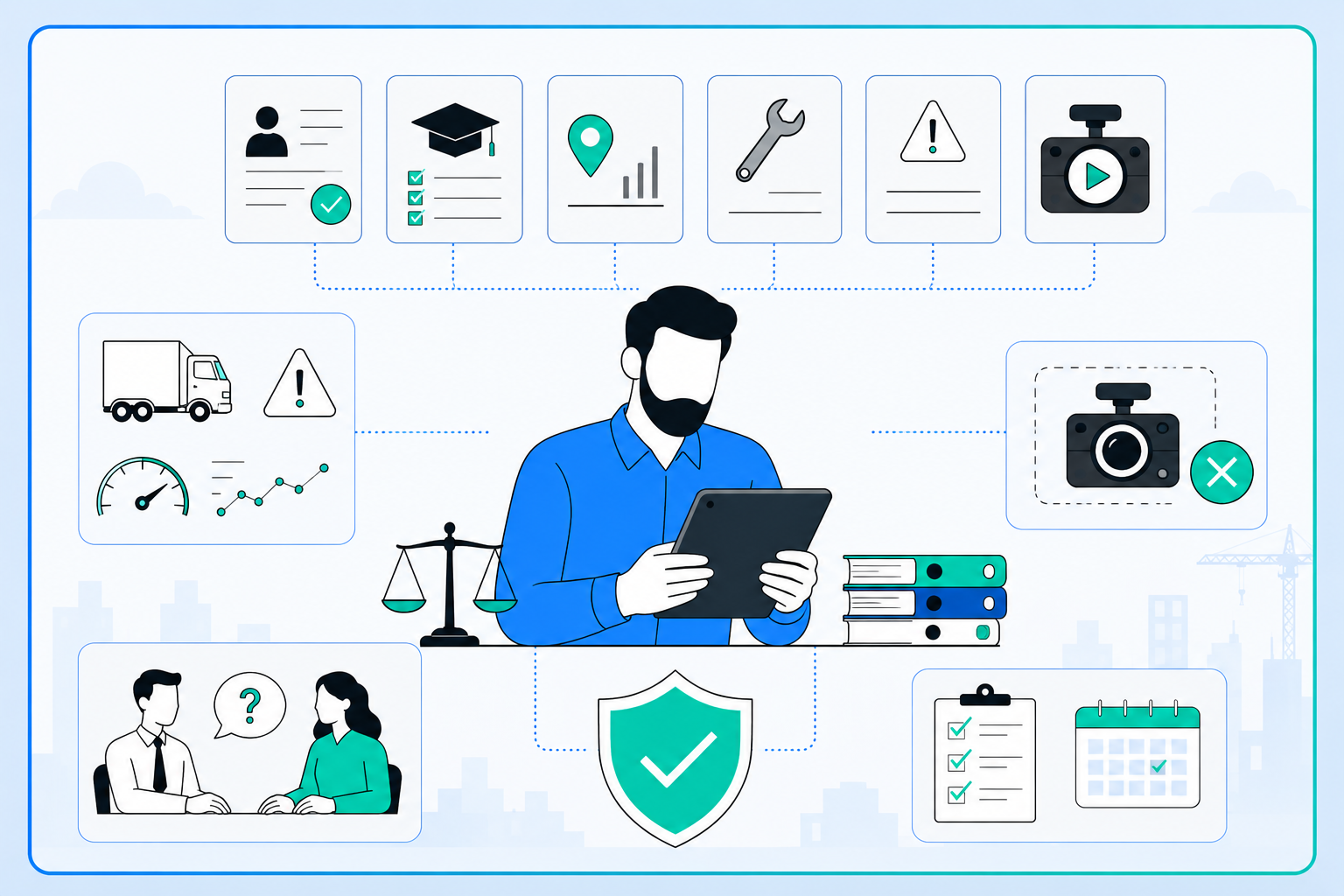
Here’s a reality many fleet managers don’t fully appreciate. The moment a serious crash happens, your safety records become evidence. Plaintiff attorneys will subpoena your driver qualification files, training records, telematics data, maintenance logs, prior incident reports, and dash cam footage. Every data point becomes a potential argument for negligence and a driver of fleet liability exposure.
The Pattern of Negligence Argument
If a driver has a history of speeding events flagged by telematics, and there is no record of coaching after each event, that pattern becomes Exhibit A. Attorneys will argue the fleet knew about the risk, did nothing about it, and therefore showed a conscious disregard for safety. That’s the language that turns a $2 million case into a $50 million one.
The Missing Video Problem
If a dash cam existed but the footage is missing, the camera was turned off, or events were never reviewed, each of those gaps becomes its own argument. The absence of documentation is often just as damaging as the documentation itself. Juries interpret missing evidence as something the fleet wanted to hide.
The Corporate Representative Deposition
In most trucking lawsuits, a fleet safety manager or operations leader will be deposed as the corporate representative. If that person cannot clearly describe the fleet’s safety program, coaching process, and documentation standards, plaintiff counsel will use that uncertainty against the company at trial. Preparedness starts long before the deposition, with the systems and habits built into daily operations.
Turning Safety Data into a Shield, not a Liability
Fleets that successfully defend against nuclear verdicts, or avoid them entirely, share a common trait. Their safety data tells a clear story of proactive, documented, and consistent action. That story starts with the right technology and the right workflows to back it up.
AI Dash Cams That Prevent Incidents Before They Happen
A standard dash cam records what happens. An AI dash cam understands what’s happening in real time and helps the driver correct course before a crash occurs. IntelliShift’s AI dash cams use computer vision and deep learning trained on more than 20 billion miles of real-world driving data to detect over 40 risky behaviors as they develop, from following too close and rolling stop signs to distracted driving, drowsiness, and cell phone use.
When a risky behavior is detected, the driver receives an immediate in-cab audio alert. That coaching moment, delivered before the risk becomes a claim, is what separates modern fleet safety from the old model of reviewing footage after the fact. Fleets using IntelliShift have seen up to a 9x reduction in serious driving incidents after deploying AI dash cams across their vehicles.
Coaching Programs That Document Every Intervention
The alerts only matter if they lead to action. IntelliShift pairs its AI dash cam technology with structured coaching workflows and sophisticated driver scoring, a behavior-based system that gives every driver a clear, data-driven measure of their safety performance.
When a risky event is captured, managers can review the video, document the coaching conversation, and track driver improvement over time. That paper trail, a consistent pattern of detection, coaching, and accountability, is exactly what defense attorneys need to counter the negligence narrative at the heart of most trucking lawsuits.
Exoneration Through Video Evidence
Research has shown that passenger vehicle drivers frequently contribute to multi-vehicle crashes involving commercial trucks. AI dash cam footage, recorded from both the road-facing and driver-facing perspectives, can prove what really happened in the seconds before impact. That footage has exonerated drivers, cleared fleets of liability, and stopped fraudulent claims in their tracks, often reducing or eliminating the trucking accident settlement value before a case ever reaches a jury.
The Power of an Integrated Fleet Safety Platform
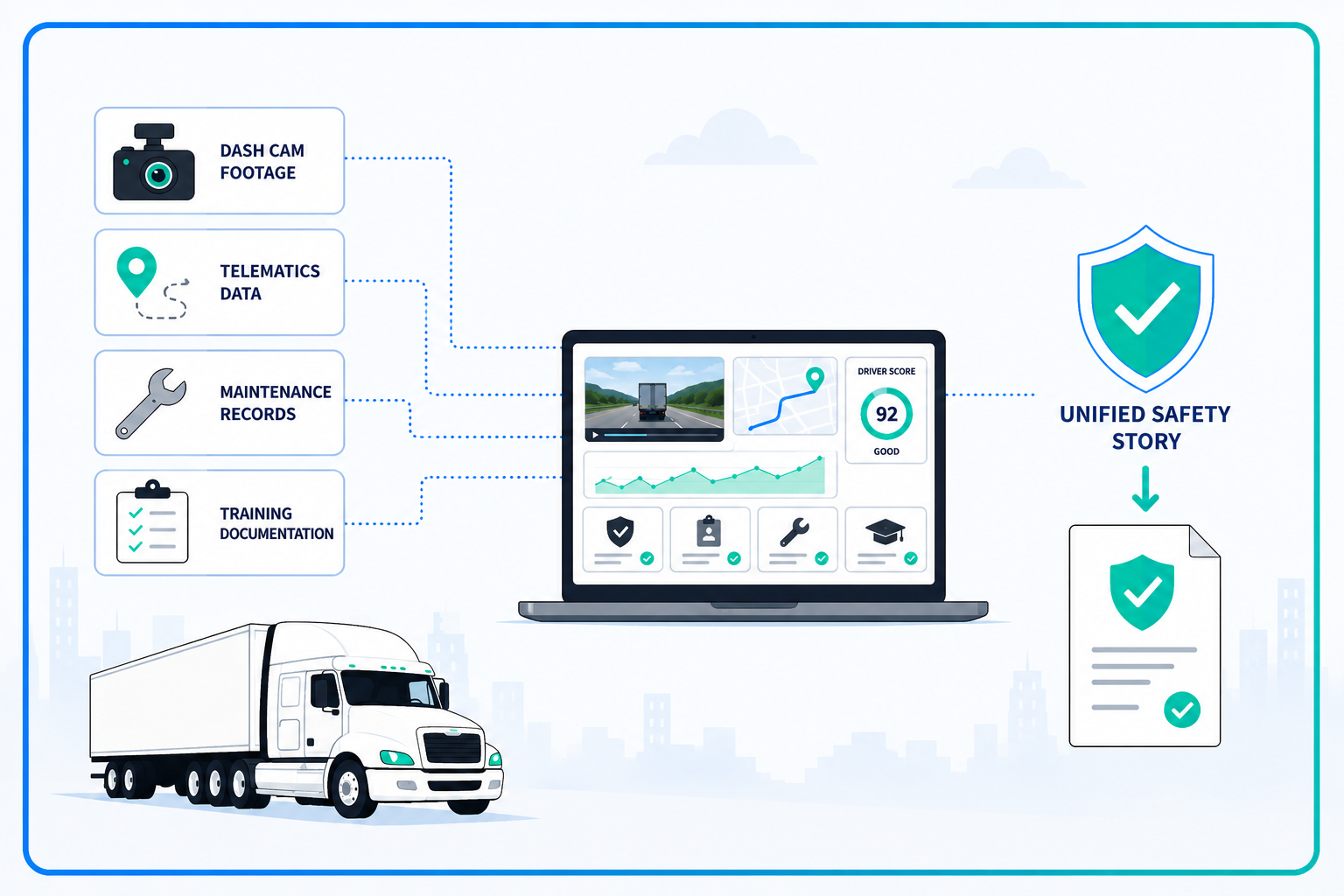
One of the biggest weaknesses plaintiff attorneys exploit is fragmentation. When a fleet’s dash cam footage lives in one system, telematics data in another, maintenance records in a third, and training documentation in a fourth, it becomes nearly impossible to produce a unified safety story under discovery pressure.
IntelliShift’s fleet telematics platform brings it all together. Video events connect to GPS and telematics data. Driver scorecards pull from behavior detection, coaching records, and training completion. Maintenance and compliance data sit alongside safety data in a single dashboard. That integration makes it easier to run a proactive safety program day to day. Just as importantly, it makes the safety program defensible when a lawsuit forces the fleet to prove its work.
What Forward-Thinking Fleet Managers Are Doing Right Now
Fleet leaders who are serious about reducing nuclear verdict exposure are taking action on several fronts at once.
Deploying AI Dash Cams Across the Entire Fleet
Partial deployments create inconsistency, and inconsistency is exactly what opposing counsel attacks. Fleets that deploy AI dash cams across every vehicle, from heavy trucks to pickups and service vans, create a uniform safety standard that is much easier to defend in court.
Documenting Every Coaching Conversation
A coaching session that isn’t documented, for practical purposes, didn’t happen. Leading fleets are using integrated platforms to log every coaching conversation, every driver acknowledgment, and every follow-up action, so the safety record in the system matches the safety culture on the road.
Running Regular Policy Reviews
Safety policies need to keep pace with the technology, the regulations, and the legal landscape. Fleets that review and update their driver handbook, dash cam notice policies, and coaching procedures at least annually are far better positioned than those operating on documents written five or ten years ago.
Training Managers, Not Just Drivers
The fleet manager on the stand during a deposition is often the deciding factor in a case. Training supervisors on how to run a defensible coaching program, how to document events, and how to enforce policy consistently is just as important as training the drivers themselves.
Partnering With Industries That Face the Highest Stakes
Verticals like construction, utilities, and field services face some of the most complex liability exposure in the industry, thanks to heavy equipment, public road transitions, and high-value assets. Fleets in these sectors are leading the shift toward integrated AI safety platforms because the cost of a single nuclear verdict can wipe out years of operating profit.
The Bottom Line on Nuclear Verdicts and Fleet Liability
The rise of nuclear verdicts in trucking is not a passing trend. Pressure on fleets will keep increasing from juries, from plaintiff firms, and from insurers who are tightening coverage terms in response. But fleet leaders are not powerless. With the right technology, the right processes, and a real commitment to building a defensible safety culture, your fleet can operate with confidence even in a hardening legal environment.
IntelliShift’s AI dash cams, combined with GreenZone® driver scoring and a fully integrated fleet telematics platform, give fleet managers the tools to prevent incidents, coach effectively, exonerate their drivers when appropriate, and build the kind of documented safety record that helps fleets build a stronger defense against catastrophic liability exposure.