
When a crash happens, the truth does not always win on its own. And the stakes are high. According to the National Highway Traffic Safety Administration, crashes involving large trucks killed 5,472 people in the U.S. in 2023.
A driver may do everything right and still end up blamed by another driver, questioned by leadership, or caught in a long insurance process that drags on far longer than it should. In those moments, opinions, assumptions, and incomplete reports can take over fast. That is exactly why clear, objective evidence matters.
That is one reason more fleets are turning to AI dash cams.
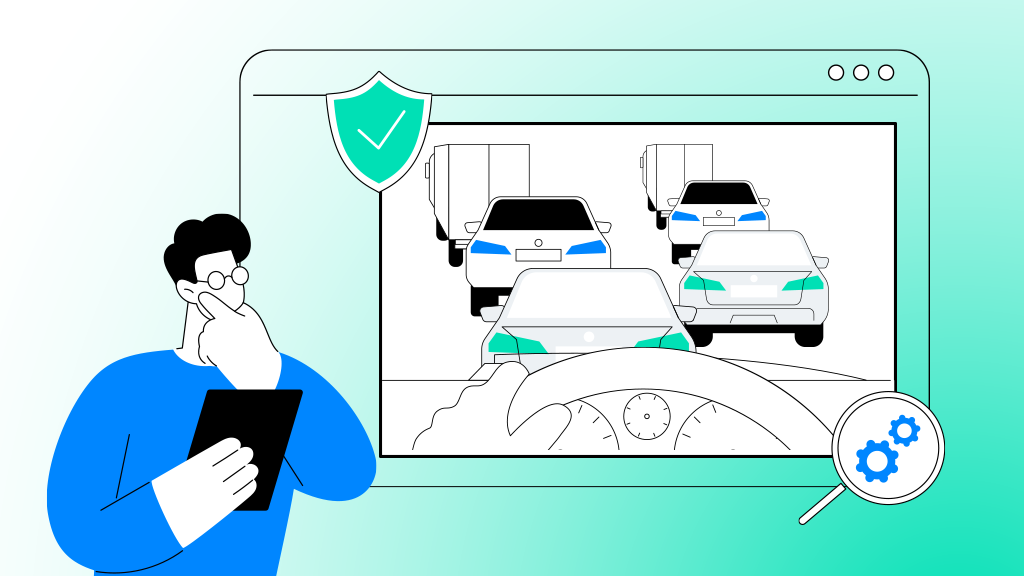
AI dash cams do more than record video. They help fleets capture what actually happened on the road, giving safety teams, managers, and insurers a clearer picture of the event. And when a driver is not at fault, that clarity matters.
Fault is Not Always Obvious After an Incident
A third party may blame your driver. A witness may only catch part of what happened. A police report may take time. Even your own team may be forced to piece together details based on limited information. That gets even more serious when you consider that, according to the same NHTSA report, about 70% of the people killed in large-truck crashes in 2023 were occupants of other vehicles.
Without video evidence, it becomes much harder to answer basic but important questions:
-
Who had the right of way?
-
Did your driver react appropriately?
-
Did another vehicle cut in, brake suddenly, or run a light?
-
Was the event truly caused by your driver, or did they just happen to be involved?
That lack of context can create serious problems for fleets. Safe drivers may be unfairly blamed. Claims can take longer to resolve. Insurance and legal costs can rise. Managers may spend hours chasing details instead of acting on facts.
In other words, when there is no clear record of what happened, the truth can get buried under noise.
What Exoneration Really Means in a Fleet Setting
Let’s be careful here, because this is where marketing can get sloppy.
Exoneration does not mean a dash cam automatically proves innocence in every case. It means fleets have stronger evidence to show when a driver acted appropriately, followed the rules, or was placed in an unavoidable situation caused by someone else.
That distinction matters.
The goal is not to “win” every claim. The goal is to get closer to the truth, faster, and protect drivers from being unfairly blamed when the facts support them.
For fleets, that can mean:
-
Reducing false claims against drivers
-
Speeding up investigations
-
Providing stronger documentation for insurance and legal teams
-
Supporting fairer internal reviews
-
Building driver trust by showing that safety tools can protect them, too
That last point gets overlooked a lot. Drivers are much more likely to support dash cam programs when they understand the camera is not just there to catch mistakes. It is also there to defend them when they do the right thing.
How AI Dash Cams Help Capture the Full Story
Traditional dash cams can provide useful footage, but AI dash cams bring more context to the table.
Instead of forcing teams to dig through endless video, AI dash cams can help surface key safety events and make it easier to review what matters. That matters in busy fleet operations, where no one has time to play detective for three hours every time something happens.
AI dash cams can help fleets by:
-
Capturing footage tied to triggered safety events
-
Providing road-facing context around incidents
-
Supporting review of risky driving moments or sudden events
-
Pairing video with other vehicle and driver data
-
Helping managers investigate events faster and more accurately
That combination is important. Video alone is helpful, but video plus operational context is where fleets start getting a clearer, more usable view of the truth.
Context Matters More Than Assumptions
A harsh braking event could look like poor driving until footage shows a passenger vehicle cutting directly in front of the truck.
A sudden swerve could sound reckless until video reveals road debris, an animal, or another driver drifting into the lane.
A rear-end collision may seem straightforward until footage reveals that the lead vehicle made an unsafe maneuver or stopped unexpectedly. That kind of context matters because risky behavior on the road is still a major factor in serious crashes. The NHTSA reported that distracted driving killed 3,275 people in 2023, while its Speeding report found speeding was involved in 11,775 traffic deaths the same year.
Without that context, drivers may carry the blame for events they did not cause. And once that happens, fleets are left dealing with the fallout.
That fallout can include:
-
Damaged driver morale
-
Slower claims resolution
-
Increased exposure to liability
-
Tension between drivers and management
-
Poorer coaching decisions based on incomplete information
This is where AI dash cams earn their place. They help remove some of the guesswork and replace it with something better, evidence.
Exoneration Protects More Than the Driver
It is easy to frame this as a driver issue, but the impact goes beyond that.
When fleets can clearly show their driver was not at fault, they are also protecting the business.
That can support:
Faster claims handling
Clear video evidence helps insurers and internal teams move more quickly through the review process.
Fairer risk assessment
Separating driver-caused events from outside factors creates a more accurate view of behavior and fleet risk.
Better coaching
Not every incident needs correction. Sometimes the right call is recognizing a driver handled a bad situation well.
Stronger driver trust
Drivers are more likely to buy into safety technology when it is applied fairly and consistently.
Reduced administrative noise
Clearer evidence reduces debate so teams can spend more time acting on what they know.
That is why exoneration is not just a legal or insurance story. It is also an operations story, a culture story, and a retention story.
Fairness Matters in Driver Safety Programs
If drivers believe every alert will be held against them, even when they did nothing wrong, you create resistance fast. The technology starts to feel like surveillance instead of support.
That is a problem.
It is also why driver protection should be part of the conversation. According to the U.S. Bureau of Labor Statistics, 798 heavy and tractor-trailer truck drivers suffered fatal occupational injuries in 2024.
The fleets that get the most from AI dash cams usually take a more balanced approach. They use the technology to identify risk, coach where needed, and defend drivers when the evidence shows they acted correctly.
That balance matters because fairness builds trust, and trust makes safety programs more effective.
A skeptical driver might reasonably ask, “Is this camera here to protect me, or just to catch me?”
Your program should be able to answer, “Both safety and fairness matter, and the facts matter most.”
IntelliShift Helps Fleets Turn Footage Into Useful Context
For fleets, the challenge is not just collecting footage. It is being able to use it.
IntelliShift helps fleets bring video, vehicle data, and driver behavior into one clearer view, so teams are not bouncing between disconnected tools trying to understand what happened. That connected view can make it easier to investigate incidents, review safety events, and respond with more confidence.
Instead of relying on assumptions or incomplete reports, fleets can work from better context.
That is especially valuable when a driver is not at fault, and the fleet needs to move quickly to review the event, support the driver, and document what actually happened.
AI Dash Cams Are Not Just About Catching Problems
This is the part many fleets, and frankly many marketers, get wrong.
AI dash cams are often framed as tools for detecting risky behavior. They can absolutely help with that. But that is only half the story.
They are also tools for protecting good drivers.
When a fleet can show that a driver responded correctly, followed the rules, or was placed in an impossible situation by someone else, that matters. It protects the driver, supports fair decision-making, and helps the business respond from a position of evidence instead of uncertainty.
That is the real value.
Because in fleet safety, the goal is not just to identify who made a mistake. The goal is to understand what actually happened.
And when your driver is not at fault, having that proof can make all the difference.
Bottom Line
AI dash cams are not just about catching mistakes. They are about giving fleets the context to respond fairly, protect good drivers, and make smarter safety decisions.
The real impact, though, depends on how the program is introduced. When drivers understand that dash cams can defend them as well as coach them, adoption gets easier, and safety programs get stronger.
Download the Driver Buy-in Guide for Successful AI Dash Cam Implementation to learn how to introduce AI dash cams in a way that builds trust, supports drivers, and sets your program up for long-term success.