
Fleet management software isn’t just another operational tool. It’s an investment in smarter, data-driven control over your vehicles, people, and assets. But like any major investment, there’s one question every fleet leader asks: When does it start paying for itself?
The truth is, ROI depends on how effectively your team translates insights into action. Used the right way, the software doesn’t just track your fleet, it tightens performance, sharpens decision-making, and shines a light on inefficiencies you didn’t even know were there.
Why ROI Matters for Fleet Management Software
Buying software can feel like a leap of faith. You’re promised efficiency, automation, and savings, but what does that look like in numbers? That’s where return on investment (ROI) comes in.
Fleet management software ROI measures the financial return your organization achieves after implementing a software solution compared to its total cost of ownership, including licensing, installation, configuration, ongoing subscription, and training.
The higher the ROI, the faster your software proves its value.
For fleets under pressure to cut costs while meeting rising performance expectations, that ROI isn’t a “nice to have.” It’s how you build a confident business case for your CFO or executive team.

How to Calculate Fleet Management Software ROI
The math is simple:
ROI (%) = [(Total Benefits – Total Costs) / Total Costs] × 100
Getting an accurate picture means defining both sides of the equation clearly—what counts as a “cost,” and what counts as a “benefit.” It’s also important to define the time period you’re measuring over, such as one year or the life of the contract.
Identify All Software-Related Costs
It’s easy to overlook the hidden costs that slow your return. Those small expenses have a way of adding up fast. To get a true picture of your ROI, make sure you’re including:
- Software licensing and implementation fees
- Hardware or sensor installation costs (if applicable)
- Employee training and onboarding time
- Internal labor costs for system setup, integrations, and data migration
- Process adjustments or workflow changes during adoption
- Ongoing subscription or support costs
These are all part of your total cost of ownership, and they matter because ignoring them can make your ROI look artificially high.
Quantify the Tangible Benefits
Once your costs are established, identify the areas where the software will reduce spending or boost efficiency. Here’s how those benefits typically break down:
Fuel Efficiency
Fleet management software that includes advanced telematics and route optimization tools, such as IntelliShift Telematics, gives you visibility into idle time, inefficient routing, and driver behavior. Utilizing telematics to reduce inefficiencies can save fleets 10–15% on annual fuel costs, resulting in one of the fastest returns. However, realizing these gains depends on active driver coaching, consistent policy enforcement, and proper use of route data.Maintenance and Downtime
Predictive maintenance and automated service alerts enable you to address vehicle issues before they lead to breakdowns. Instead of relying on reactive repairs, software helps extend asset lifecycles and avoid costly downtime. Fleets using predictive insights commonly reduce maintenance costs by 18–25%, and the savings grow with fleet size. Results vary based on how consistently maintenance insights are used and whether service intervals are properly managed.Labor and Administrative Efficiency
Automation is one of the biggest ROI levers. Fleet management software replaces manual logging, data entry, and reporting with automated workflows. That translates into fewer hours spent on paperwork and more jobs completed per day. That said, insurance savings typically depend on sustained improvements in driver safety records, not just the presence of safety software.Safety and Insurance
AI-powered safety tools and driver behavior monitoring reduce collisions and claims. When integrated into your software ecosystem, these tools can stabilize or even decrease insurance premiums and liability expenses, delivering both hard and soft ROI.Asset Utilization and Lifecycle Decisions
Fleet management software also improves ROI by providing better asset utilization data, helping fleets decide when to repair, replace, or retire a vehicle. Smarter lifecycle management means you’re not over-maintaining aging assets or underusing newer ones.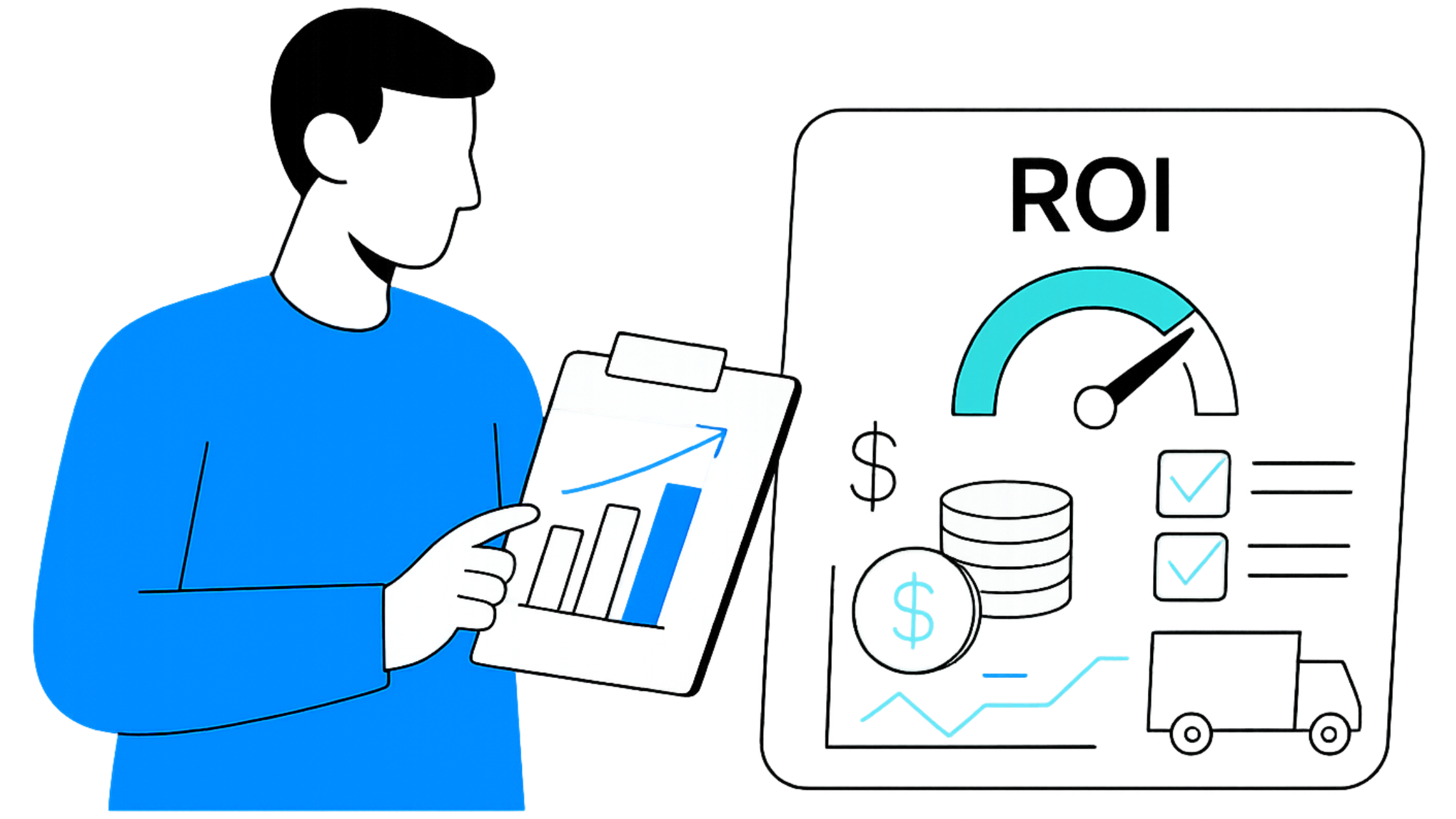
The Biggest ROI Drivers of Fleet Management Software
Unified Platform Visibility
Running separate tools for GPS tracking, maintenance, and safety makes your operation inefficient by design. The true ROI of modern fleet management software comes from integration, a single, unified view that eliminates redundant systems and manual work.
Actionable Data and Analytics
The value isn’t in collecting data. It’s in interpreting it. Software that converts raw data into clear insights drives faster decisions and higher returns. With IntelliShift’s analytics, fleet leaders identify trends, compare performance, and act on what matters most.
Automation of Repetitive Tasks
Every hour your team spends on spreadsheets or chasing down driver logs is wasted potential. Automated workflows for DVIRs, maintenance scheduling, and compliance reduce overhead and free teams to focus on strategic priorities.
Seamless System Integration
Fleet management software delivers stronger ROI when it integrates with your existing systems, ERP, payroll, dispatching, or fuel cards. IntelliShift helps Fleet Managers ensure data flows smoothly between departments, multiplying value across your business. Note that integration capabilities vary between providers, and successful integration often requires IT involvement and planning.
How IntelliShift Accelerates ROI
IntelliShift’s unified platform helps fleets achieve ROI faster by replacing disconnected point solutions with one connected ecosystem. That means:
- Total cost visibility from day one. IntelliShift analytics give you real-time insight into savings versus spend.
- No more double data entry. All operational data lives in one place.
- Instant visibility into performance. Dashboards reveal trends across fuel, maintenance, and safety in real time.
- Integration without friction. IntelliShift connects with your existing business systems so your workflows stay smooth and consistent.
- Faster implementation. IntelliShift’s deployment model minimizes downtime so you start seeing results quickly.
While no implementation is completely frictionless, IntelliShift’s guided rollout helps reduce complexity and ensures faster time-to-value.
Together, these advantages shorten the path to ROI while delivering ongoing cost control and performance improvement.

Best Practices for Maximizing Software ROI
Define Success Metrics. Whether it’s reducing idle time by 15% or improving uptime by 10%, set measurable KPIs.
Include All Costs Up Front. Remember to calculate ROI using total cost of ownership, including setup, training, and support.
Train Your Team. The fastest ROI comes when everyone understands how to use the platform effectively
Use Analytics Regularly. Review dashboards weekly and act on the insights you gain, rather than just reviewing them passively.
Integrate Everything. Connect your fleet management software with the rest of your systems to eliminate silos.
Is Fleet Management Software Worth It?
For most fleets, absolutely. The biggest returns come when it’s part of a unified platform supported by a clear strategy, strong training, and measurable goals. ROI isn’t only about cutting costs; it’s about improving decision-making, building operational confidence, and setting the stage for long-term growth.
A connected platform pays for itself the moment it replaces guesswork with insight, when your team stops reacting to problems and starts predicting them. That is the difference between simply managing your fleet and strategically managing your business.
Ready to run the numbers for your own fleet?
If you want a clearer picture of when fleet management software starts paying for itself, you need the right formula and the right framework. The IntelliShift TCO Calculation Guide walks you through every cost that belongs in the equation so you can build a confident, airtight business case.