![Erin celebrates building the fleet community with 50 episodes and 11K followers on LinkedIn [Podcast]](https://intellishift.com/wp-content/uploads/2026/03/gfx-blog_HOS-ELD-compliace.png "Episode 50 Thumbnail")

When the Electronic Logging Device mandate went into effect, a lot of fleets treated it like a paperwork upgrade. Paper logs became digital logs. Clipboards turned into tablets. Problem solved.
Except it was never that simple.
ELDs did not just change how drivers record hours. They changed how Hours of Service rules are enforced. They removed guesswork. They removed rounding. They removed “close enough.”
Now, driving time is recorded automatically, and required vehicle and location data is captured at key intervals and events. Every log edit leaves a fingerprint.
That shift matters.
Because Hours of Service compliance used to be about whether a logbook looked clean. Now it is about whether your operation actually runs within legal limits.
And that is a very different conversation.
What an ELD Actually Is, and What It Is Not
An Electronic Logging Device connects to a vehicle’s engine and automatically records driving time. It tracks when the vehicle moves, how long it runs, and when it stops. Drivers then select duty status changes, like on duty, off duty, sleeper berth, or personal conveyance.
That is the technical definition.
But here is what many fleets miss.
An ELD is not just a digital logbook. It is an enforcement tool. It removes much of the flexibility that paper logs allowed. If a driver drives for eleven hours and five minutes, then those five minutes exist. There is no way to quietly erase it; corrections can only be made through documented edits that leave an audit trail.
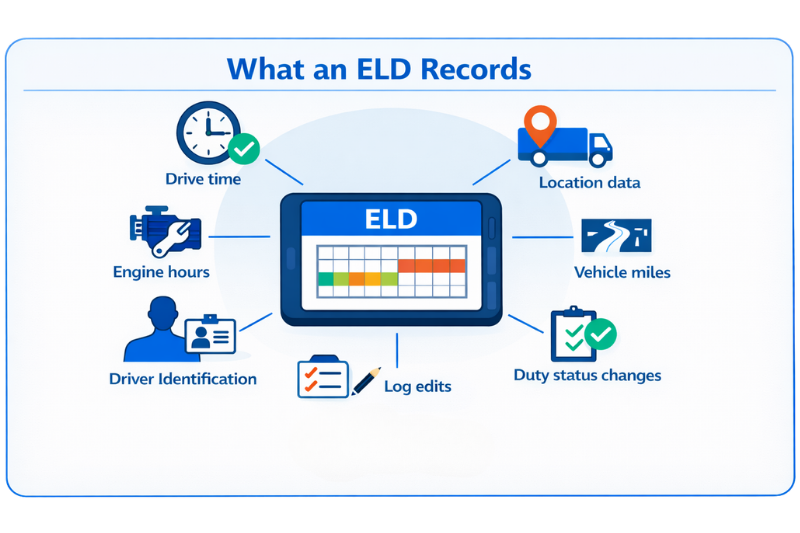
ELDs record:
- Driving time based on vehicle movement
- Engine hours
- Vehicle miles
- Location data at specific intervals and key events
- Duty status changes
- Log edits and annotations
This data must be transferable during a roadside inspection. That means an officer can request it and review it on the spot.
So if your operation is pushing drivers to squeeze in “just one more stop,” the ELD will not look the other way
Who Actually Needs an ELD
There is still confusion here, even years after the mandate.
Most commercial drivers required to keep Hours of Service logs must use an ELD. That typically includes drivers of vehicles over 10,001 pounds engaged in interstate commerce. It can also include certain passenger-carrying vehicles and vehicles transporting placarded hazardous materials.
There are exceptions. Short-haul drivers operating within specific air-mile limits may qualify for timecard exemptions.
For example, some short-haul drivers may qualify when operating within a 150 air-mile radius and meeting the applicable return and workday limits, provided the carrier maintains the required time records. Drivers using vehicles older than model year 2000 are exempt from ELD requirements. More precisely, the exemption generally applies to vehicles with engines that have a model year of 2000 or older. Some agricultural and emergency relief operations also qualify for temporary exemptions.
But here is where fleets get into trouble.
Many assume that because a portion of their drivers qualify for an exemption, they can ignore ELD discipline across the board. That is risky thinking.
If even one driver in your fleet requires an ELD, your compliance culture cannot be selective. Even when only part of a fleet is subject to the ELD rule, applying consistent compliance processes across the operation is usually the safer approach.
Compliance systems work best when they are clear and consistent.
What ELD Data Really Means During an Inspection
A roadside inspection used to involve flipping through pages of handwritten logs. Officers looked for obvious gaps, math errors, or missing signatures.
Now the process is different.
When an officer requests ELD data, the file is transferred electronically. That allows inspectors to quickly review Hours of Service data and identify potential violations or inconsistencies. Driving time beyond limits, missed breaks, and improper edits can be easier to flag.
There is no debate over handwriting. There is much less room for unclear entries or missing math.
The data either aligns with Hours of Service rules, or it does not. In practice, the data provides a much more objective basis for review, although annotations, exemptions, and supporting documents can still matter.
This changes the pressure point for fleet managers.
The risk is no longer sloppy paperwork. The risk is operational behavior that consistently pushes drivers too close to the limit.
If dispatch schedules routes that cannot realistically be completed within legal hours, the ELD will expose that pattern over time.
That is why ELD compliance is not just a driver issue. It is an operations issue.
The Biggest Misconception About ELDs
Here is one that needs to be said clearly.
ELDs do not prevent Hours of Service violations.
They record them.
Some fleets believe installing ELDs automatically makes them compliant. That is not how this works.
An ELD does not fix poor scheduling. It does not coach a driver who ignores rest requirements. It does not redesign routes. It does not correct pressure from leadership to meet unrealistic deadlines.
It simply makes non-compliance visible.
And visibility cuts both ways. It protects you when you are disciplined. It exposes you when you are not.
When ELD Data Becomes a Pattern, Not Just a Log
One violation might be a mistake. A pattern is something else.
That is where smart fleet managers focus.
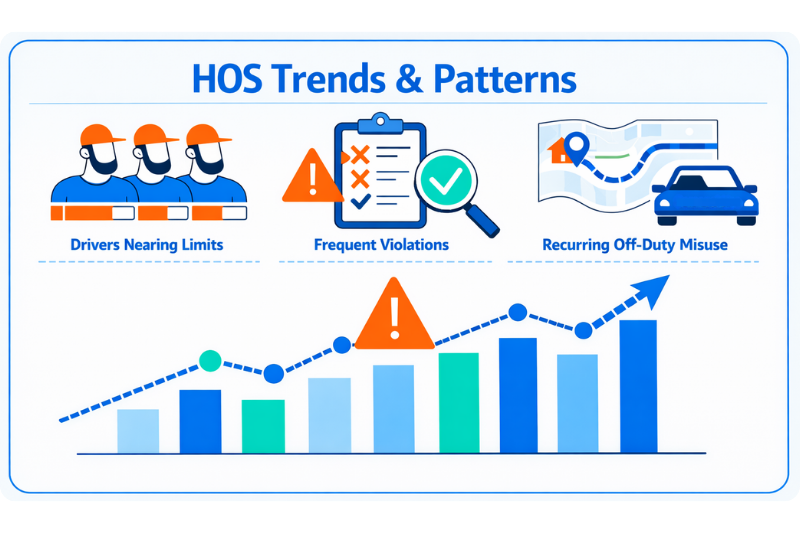
ELDs generate more than daily logs. Over time, they reveal trends. If the same drivers repeatedly approach their 14-hour limit before the last stop, that is not a logging issue. It is a planning issue. If drivers regularly use personal conveyance at the end of a shift, that deserves a closer look. That does not automatically mean misuse, but fleets should confirm that the use fits FMCSA guidance and company policy. If the 60- or 70-hour clock is constantly maxed out by Thursday, that signals workload imbalance.
This is where compliance and operations meet.
The purpose of reviewing ELD data should not be to catch drivers doing something wrong. It should be to identify operational friction before it turns into violations, fatigue, or risk.
Fleets that treat ELD review as a weekly audit task stay reactive. Fleets that use it to adjust routes, shift schedules, and staffing levels stay ahead.
That is the difference between surviving inspections and building a disciplined operation.
Preparing for an Audit Starts Long Before the Audit
Many fleets think about ELD compliance when they receive notice of a DOT audit. By then, the story is already written.
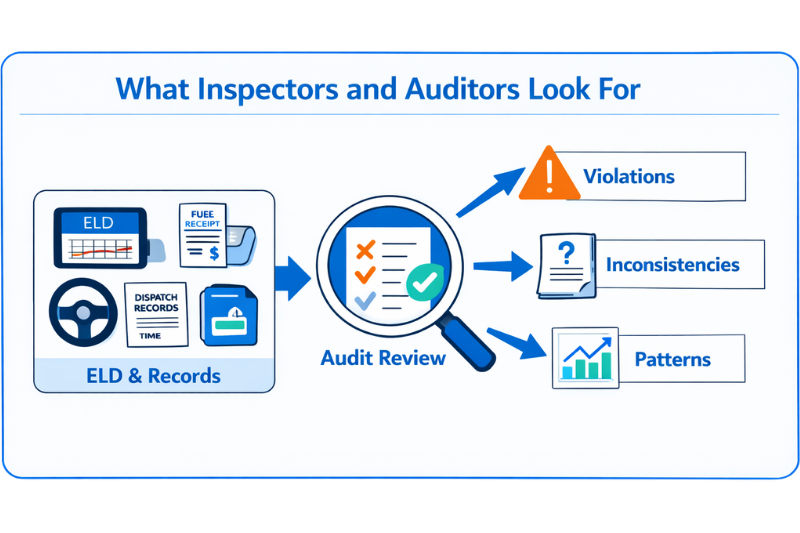
During an audit, investigators will look at more than daily logs. They review:
- Supporting documents such as fuel receipts and dispatch records
- Log edits and annotations
- Unassigned driving time
- Patterns of repeated violations
They compare ELD data to operational records. If miles driven do not match dispatch documentation, questions follow. If unassigned driving time stacks up without explanation, that becomes a red flag.
The goal is consistency.
The cleanest audits happen when ELD data aligns with how the fleet actually operates. That only happens when managers routinely review logs, address unassigned driving quickly, and coach drivers on accurate status changes.
Waiting for an audit to clean up ELD practices is like waiting for a breakdown to schedule maintenance. It is possible, but it is expensive and stressful.
Where Fleets Still Struggle with ELD Compliance
Even experienced fleets run into the same issues.
One common problem is overconfidence. After the first year of using ELDs, teams assume they have it handled. Training slows down. New drivers are shown the basics but not the reasoning behind the rules.
Another issue is inconsistent enforcement. If one supervisor allows “small” violations but another enforces strictly, drivers receive mixed signals. Compliance becomes optional depending on who is watching.
Then there is edit discipline. ELD systems allow limited log edits with proper documentation. That is necessary. But frequent or poorly documented edits can draw attention during inspections. Every edit leaves a trace. If they appear routine rather than occasional corrections, that raises questions.
None of these problems come from the technology itself. They come from process gaps around the technology.
Turning ELD Compliance into an Operational Advantage
This is where the conversation shifts.
If ELDs are treated only as a mandate, they feel restrictive. They limit flexibility. They expose mistakes. They create pressure.
But if they are treated as an operational feedback system, they become useful.
ELD data can help fleets:
- Set realistic route expectations based on actual drive time
- Identify workloads that push drivers too close to legal limits
- Spot fatigue risk before it turns into incidents
- Align dispatch planning with legal hours
When managers review trends instead of isolated days, they see where the operation is tight and where it has margin. That visibility supports better decisions.
The fleets that handle Hours of Service well do not obsess over individual violations. They focus on designing schedules that make violations unlikely in the first place.
That approach protects drivers, reduces enforcement risk, and creates a more stable operation overall.
The Bottom Line
ELDs did not create Hours of Service rules. They made them transparent.
There is no more guessing. No more rounding. No more hoping a logbook looks acceptable during inspection. The records make compliance easier to verify, and they make operational gaps much harder to hide.
For fleet managers, that clarity can feel uncomfortable at first. But it also provides something valuable: a clear view of how the operation truly runs.
Compliance is no longer about paperwork. It is about discipline, planning, and consistency.
ELDs simply make that visible.
And fleets that accept that reality, instead of fighting it, are the ones that stay compliant and operate with confidence.
ELDs may record the hours, but compliance starts long before the log is reviewed. For a full breakdown of Hours of Service rules and what they mean for your fleet, read the Complete HOS Guide,