
Fleet safety is no longer just a compliance checkbox — it’s a bottom-line imperative. With commercial vehicle accidents costing businesses an average of $16,500 per incident, and severe crashes reaching hundreds of thousands in damages, fleet managers are under increasing pressure to move beyond reactive safety strategies.
AI dash cams for fleet safety represent the most significant advancement in commercial fleet protection in years. Unlike basic recording devices, today’s AI-powered systems use machine learning to analyze driving behavior in real time — identifying risky habits before they become costly incidents. The result is a shift from documenting accidents to preventing them, transforming fleet safety from a cost center into a competitive advantage.
Why AI Dash Cams Are Changing Fleet Safety
Traditional dash cams capture footage after something goes wrong. AI dash cams for fleet safety flip that model entirely. By continuously analyzing multiple data streams — driver behavior, road conditions, vehicle dynamics — these systems detect risk before it becomes an incident.
Where passive cameras rely on post-incident review, AI-powered fleet safety cameras deliver:
- Real-time driver behavior analysis: Detects distracted driving, drowsiness, or aggressive behavior as it happens.
- Advanced collision detection: Identifies potential forward-collision risks and harsh events.
- Instant alert systems: Sends real-time feedback to both drivers and fleet managers.
Accident Reduction Through Behavioral Change
The difference between standard and AI-powered fleet safety cameras isn’t just technology — it’s a fundamental change in how safety programs operate. Standard cameras capture what already happened. AI dash cams help prevent it from happening at all.
This proactive approach is why fleets that compare AI dash cams for fleet safety against standard cameras overwhelmingly choose AI — not just for better evidence, but for better outcomes.
How AI Dash Cams Improve Fleet Safety and Reduce Costs
Accident Reduction Through AI Dash Cam Driver Coaching
The single most effective way AI dash cams for fleet safety reduce accidents is through fleet dash cam driver coaching. When drivers receive immediate, in-cab feedback on risky behaviors — speeding, tailgating, distracted driving — they self-correct in the moment rather than waiting for a post-shift review.
Fleet dash cam driver coaching programs built on AI data produce consistent, measurable results:
- Fleets report reductions in harsh-braking and following-distance events within the first 30 days
- At-fault incident frequency declines within 90 days of deployment
- The data-driven coaching loop creates lasting behavioral change — not temporary compliance
Fleets using AI dash cams for fleet safety see fewer accidents, and the reason is simple. When drivers get real-time coaching and clear insights into their habits, behavior changes fast. Fleet driver behavior monitoring fosters accountability and builds a lasting culture of safety awareness across the entire team.
How AI Dash Cams Lower Fleet Insurance Costs
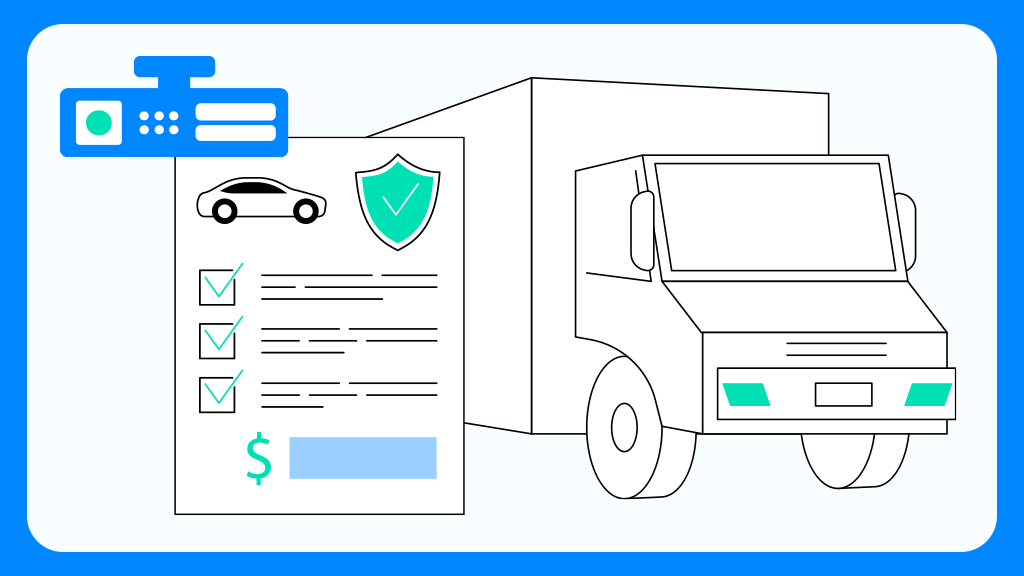
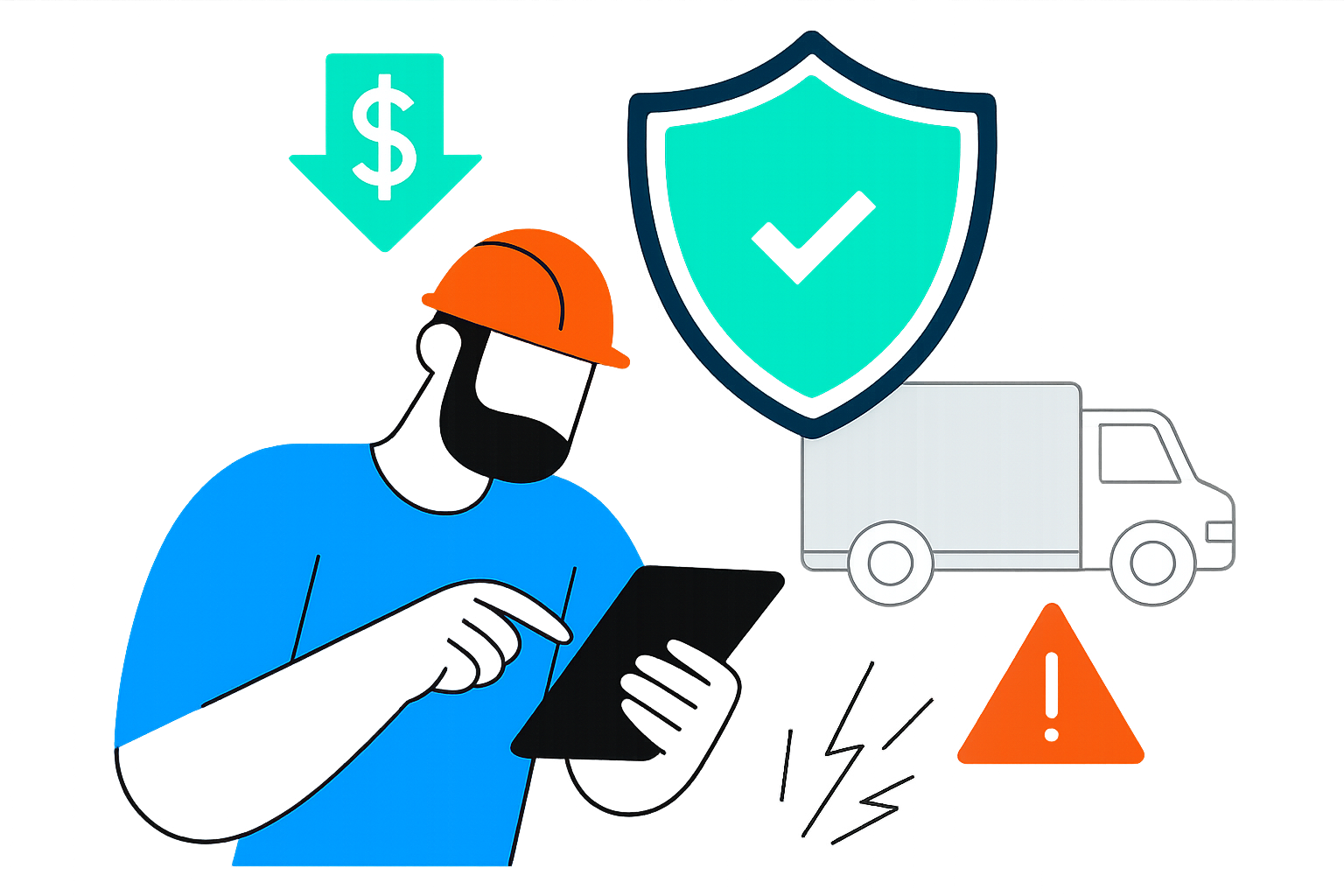
One of the most compelling ai dash cams insurance costs benefits is the direct impact on premiums. Insurance carriers increasingly recognize fleets using AI video safety systems as lower-risk accounts. Many carriers now offer premium discounts — often up to 20% — for fleets that can demonstrate active, data-driven safety programs powered by fleet safety cameras.
But the insurance impact extends beyond premium reductions. AI dash cams for fleet safety provide:
- Video evidence that exonerates drivers from false claims
- Accurate incident documentation that reduces claim investigation time
- Behavioral data that demonstrates proactive safety investment to underwriters
- A documented pattern of improvement that insurers reward at renewal
Driver Exoneration and Legal Protection
When the unexpected happens, AI dash cams provide more than just video; they deliver data. The combination of video evidence and behavioral analytics helps exonerate innocent drivers, shield companies from false claims, and strengthen the documentation needed to resolve disputes quickly.
Building Driver Trust: Addressing Privacy Concerns with Fleet Safety Cameras
Successfully deploying AI dash cams for fleet safety starts with driver buy-in. Initial resistance is normal — but it’s entirely manageable with the right approach. Modern fleet safety cameras are designed to protect drivers, not just monitor them.
Here’s what successful rollouts have in common:
- Clear communication about safety goals and how the system protects drivers.
- Hands-on training to help drivers understand how alerts and feedback work.
- Recognition programs that reward safe driving and positive behaviors.
- Transparent data policies that spell out exactly how footage and analytics are used.
The data consistently shows that drivers who understand how fleet dash cam driver coaching works — and experience it as a tool for improvement rather than punishment — become the program’s strongest advocates.
For a step-by-step rollout playbook, see: The Driver Buy-In Guide to Successful AI Dash Cam Implementation
AI Dash Cam ROI Timeline for Fleets
Fleet managers evaluating AI dash cams for fleet safety typically see measurable returns within 6–12 months. Understanding the ai dash cam cost benefits at each stage helps build the business case:
- Reduction in harsh driving events
- Improved driver awareness and behavior modification
- Enhanced incident documentation capabilities
- Decreased accident frequency
- Reduced insurance claims
- Lower maintenance costs due to improved driving habits
- Sustained accident reduction
- Insurance premium reductions
- Improved driver retention through enhanced safety culture
The financial impact of AI dash cams for fleet safety extends beyond direct cost savings. Fleets also report improved driver retention — a critical factor as turnover costs reach $8,000–$12,000 per driver — and stronger operational efficiency through fewer vehicle downtime incidents.
The Business Case: Calculating Your Fleet Dash Cam ROI
Calculating the exact return on your AI dash cam investment depends on your fleet’s baseline metrics. A practical starting framework:
Direct Cost Savings (example: 50-vehicle fleet)
- Accident reduction (22% fewer incidents at $16,500 avg): $18,000–$45,000/year
- Insurance premium reduction (10–20%): $15,000–$50,000/year
- Avoided false claim settlements: $30,000–$100,000+
- Reduced vehicle repair and downtime costs: $10,000–$25,000/year
Typical AI Dash Cam Investment
- Hardware + software subscription: $40–$80/vehicle/month
- Annual cost for 50 vehicles: ~$24,000–$48,000
Fleet Dash Cam ROI: Most 50+ vehicle fleets achieve full payback within 6–12 months, with compounding savings year over year as safety culture improves.
Ready to see the full cost picture? Download the Hidden Cost of Not Having AI Dash Cams guide
How to Get Started with AI Dash Cams for Fleet Safety
Rolling out AI dash cams doesn’t have to feel overwhelming. The most successful fleets start small by launching a pilot with a handful of vehicles to test visibility, alert accuracy, and driver feedback.
Within weeks, fleet managers typically see measurable improvements in driver behavior and safety culture. From there, expanding fleet-wide is simple. The key is pairing the technology with clear communication, positive reinforcement, and consistent coaching.
When evaluating fleet safety cameras, look for systems that integrate directly with your telematics and compliance platforms. Standalone cameras create data silos; integrated AI dash cams for fleet safety create a unified view of driver behavior, vehicle health, and operational performance. IntelliShift’s AI dash cam solution connects fleet safety data with GPS tracking, ELD compliance, and fleet maintenance in a single platform.

The Future of AI Dash Cam Technology in Fleet Safety
AI isn’t standing still and neither should your fleet. As technology advances, fleet driver monitoring tools will continue to evolve, offering deeper insights through predictive analytics, tighter telematics integration, and more context-aware fleet risk management features.
Fleet leaders who adopt AI dash cams for fleet safety now aren’t just improving safety—they’re shaping the future of intelligent fleet operations. The payoff? Lower costs, safer roads, and a culture of trust and accountability that keeps both drivers and operations performing at their best.
As AI dash cam technology evolves, fleet managers who invest now will benefit from increasingly sophisticated capabilities: deeper integration with route planning, predictive risk scoring based on historical patterns, and automatic insurance reporting. The fleets building data-driven safety cultures today will have a significant competitive advantage as these capabilities mature.
See the full comparison: AI Dash Cams vs. Standard Fleet Dash Cams: What’s Driving Safer Fleets
Frequently Asked Questions: AI Dash Cams for Fleet Safety
How do AI dash cams for fleet safety actually reduce accidents?
AI dash cams reduce fleet accidents through real-time driver coaching. When drivers receive immediate in-cab alerts about risky behaviors — tailgating, distracted driving, hard braking — they correct in the moment. Studies show fleets using AI dash cams for fleet safety see accident reductions of 22% or more within the first year of deployment.
Can AI dash cams help lower my fleet’s insurance costs?
Yes. AI dash cams for fleet safety reduce insurance costs two ways: by reducing accident frequency directly, and by providing video evidence that exonerates innocent drivers from fraudulent claims. Many insurers offer premium discounts of up to 20% for fleets with active AI video safety programs.
What is the typical ROI timeline for AI dash cams for fleet safety?
Most fleets see measurable ROI within 6–12 months. Early wins include reduced harsh-driving events (months 1–3), fewer at-fault accidents and insurance claims (months 3–12), and long-term premium reductions and driver retention improvements at 12+ months.
How does fleet dash cam driver coaching work?
Fleet dash cam driver coaching uses AI to analyze driving behavior in real time. When a risk is detected — distraction, following too closely, lane departure — the system delivers an immediate in-cab audio alert. Managers receive event summaries, driver scorecards, and trend reports to identify coaching priorities across the fleet.
Are AI dash cams for fleet safety intrusive for drivers?
Modern AI dash cams are designed to protect drivers, not punish them. When drivers understand the system exonerates them from false claims, scores them fairly, and rewards safe behavior, buy-in increases significantly. The most successful programs lead with driver protection as the primary benefit.
What should I look for when evaluating AI dash cams for fleet safety?
Key features to evaluate: 99%+ AI detection accuracy to eliminate false positives, in-cab audio coaching, dual-facing cameras (road and driver), integration with your fleet management platform, automated event reporting, and 1080p HD video quality.