Every summer, the roads your drivers depend on become the most dangerous stretch of pavement they will see all year. The period between Memorial Day and Labor Day even has a name in the traffic safety world: the 100 Deadliest Days. It earns that name year after year. For fleet leaders, this is not just a teen driver problem or a someone-else problem. Your professional drivers share the road with every distracted, speeding, and inexperienced driver who hits the highway once school lets out. The good news: a focused conversation with your team, backed by the right technology, can make a real difference before the season peaks. Here is how to have that talk, and how to extend it to the teen drivers in your people’s lives.
What the 100 Deadliest Days Means for Your Fleet
Sources: AAA, NHTSA, Insurance Institute for Highway Safety.
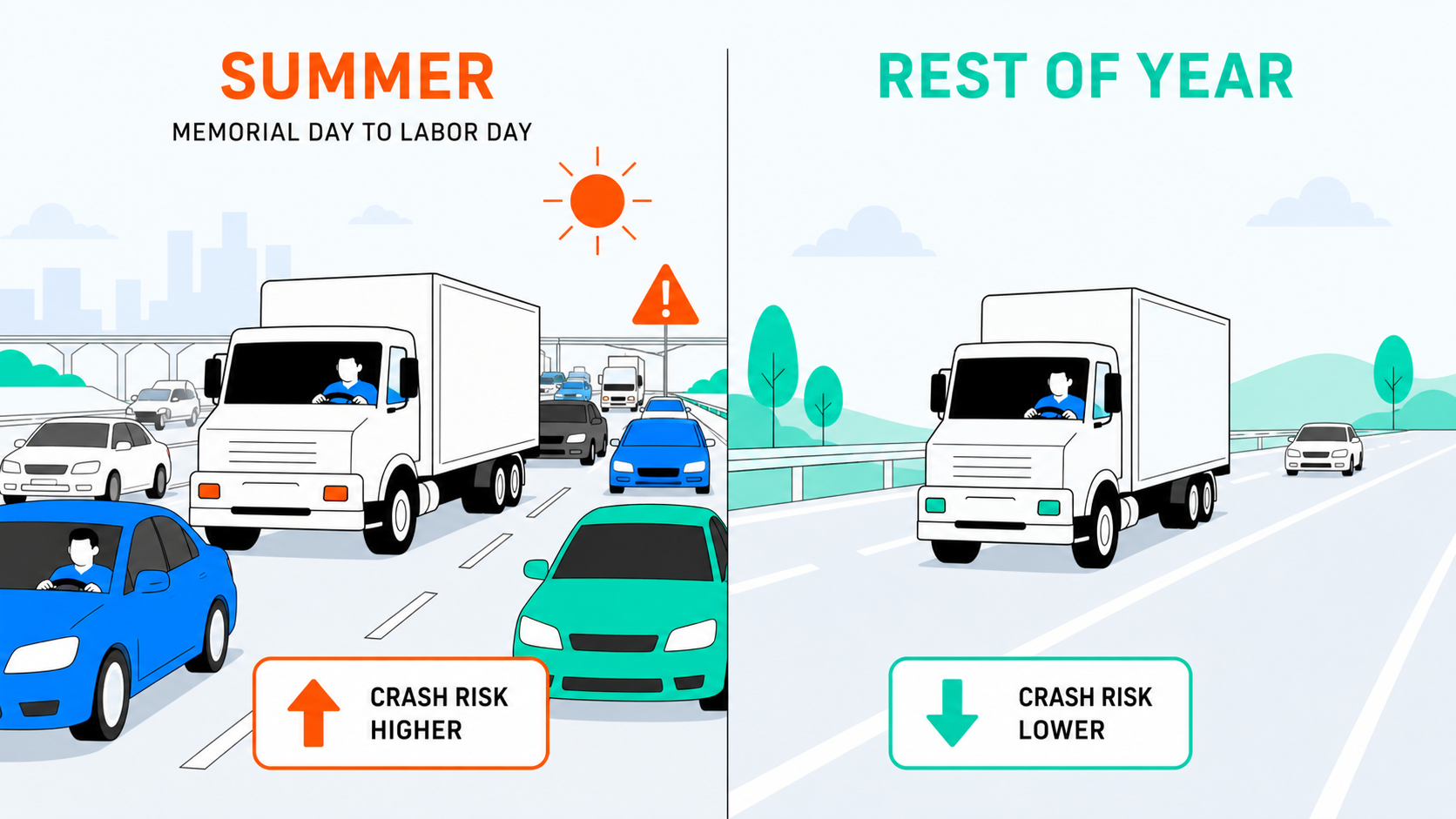
But the risk does not stop with teens. Summer is one of the busiest and deadliest seasons on the road for everyone. More vehicles are traveling, daylight hours are longer, vacation traffic fills the highways, and construction season is in full swing. The Insurance Institute for Highway Safety reports that July and August are consistently among the deadliest months for drivers of all ages. In the summer of 2024 alone, more than 10,000 people died on U.S. roads between June and August.
For your fleet, here is the key point: even your most experienced drivers face higher risk in summer, because of everyone else on the road around them. A seasoned driver cannot control the distracted teen in the next lane or the vacationer who drifts across the center line. What they can control is their own attention, speed, and following distance. That is exactly where a good conversation and the right AI dash cam coaching tools come in.
Why the Conversation Matters More Than the Memo
It is tempting to send a safety reminder email and check the box. But a forwarded policy rarely changes behavior. Drivers tune out reminders they have heard a hundred times. What moves the needle is a real conversation: one that connects the risk to their daily routes, respects their experience, and gives them practical tools rather than a lecture.
Safety leaders who treat the 100 Deadliest Days as a coaching moment, not a compliance exercise, tend to see better buy-in. When drivers understand why a behavior matters and feel like partners in safety rather than targets of surveillance, they are far more likely to change how they drive. That shift in culture is what protects your people, your equipment, and your bottom line long after summer ends.
How to Talk to Your Team About Summer Driving Risk
Lead with the why, not the rulebook
Start with the reason the conversation is happening. Share a few of the numbers above and connect them to your own operation. Drivers respond to honesty: tell them you want everyone to get home safe, and that summer is statistically the hardest time of year to make that happen. When the goal is clear, the rules make more sense.
Make the risks specific and seasonal
Generic safety talks fade fast. Point to the conditions your drivers will actually face this summer: more teen and tourist drivers, heavier congestion near job sites and delivery zones, sun glare during early and late shifts, and active work zones. The more specific you get, the more the conversation sticks.
Keep it two-way
The best safety talks are conversations, not speeches. Ask your drivers what they see on their routes, what near-misses they have had, and what would help them stay safe. Frontline drivers often spot risks that never reach the office. Listening also signals respect, which makes the rest of your message land.
Pair the talk with real-time support
Words fade, but in-the-moment feedback sticks. This is where technology turns a once-a-summer talk into daily reinforcement. IntelliShift’s AI dash cams use edge computing to analyze driving as it happens, right on the device, so there is no waiting on a cloud connection. The system recognizes more than 40 risky behaviors, from following too closely to phone use, and delivers a real-time in-cab audio alert the moment one is detected. That gentle nudge often corrects a behavior before it becomes an incident. Trained on more than 20 billion miles of real-world driving data, the system is built to tell the difference between a genuine risk and a normal maneuver, so your drivers hear from it only when it counts.

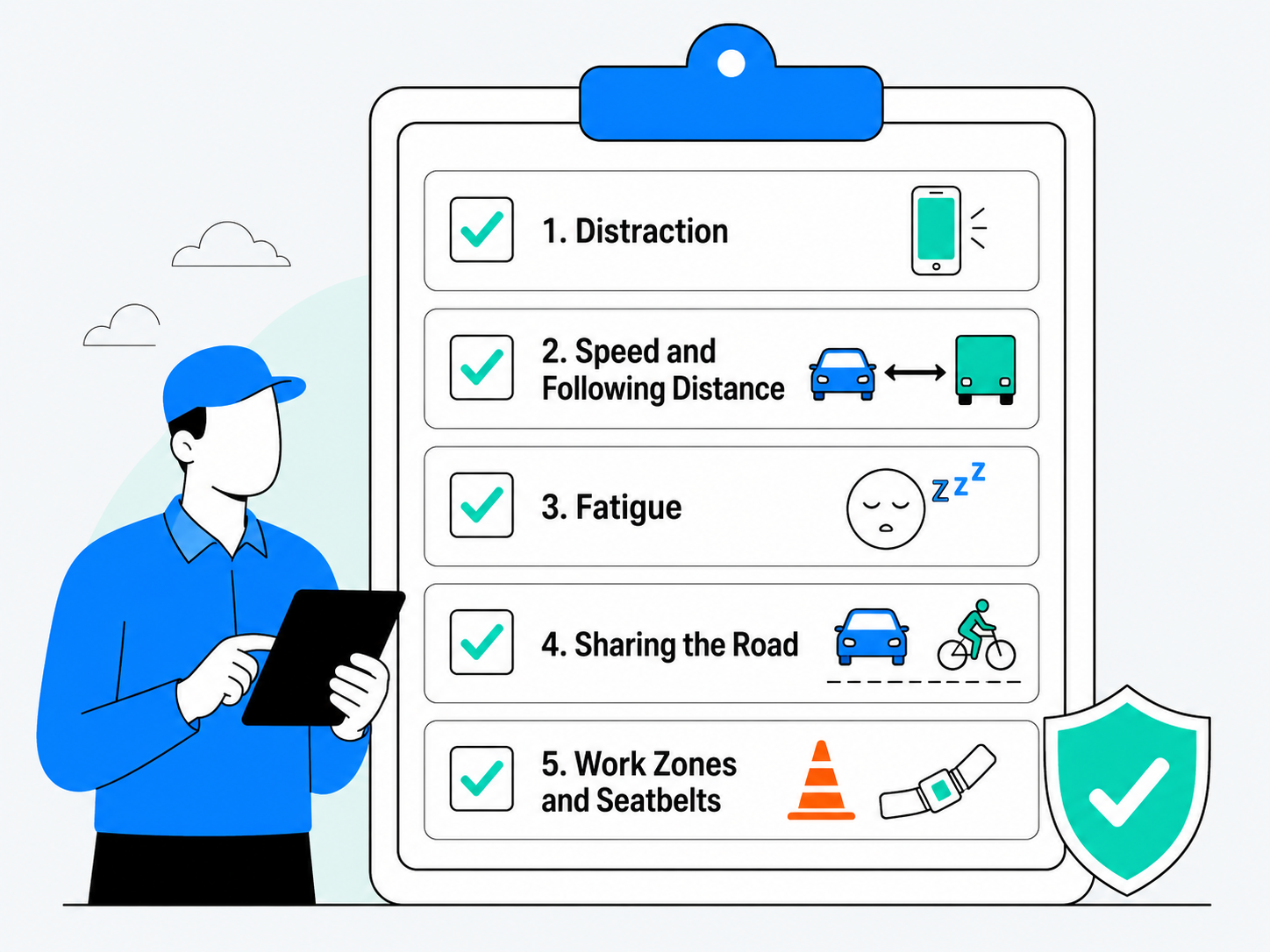
The Summer Safety Topics Worth Covering
You do not need to cover everything in one sitting. Pick the handful of risks that matter most for your fleet and your season.
Distraction
Distraction is the single biggest factor in summer crashes. Nearly six out of ten teen crashes involve some form of distraction, and adults are far from immune. Talk through the small habits that add up: glancing at a phone, eating behind the wheel, fiddling with navigation. Remind drivers that a few seconds of eyes-off-road at highway speed can cover the length of a football field. For a deeper look at how this works on the road, see our guide on how AI dash cams detect distracted driving in real time.
Speed and following distance
Speeding is a factor in roughly a third of fatal crashes involving younger drivers, and summer congestion makes tailgating tempting. Coach drivers to build in extra following distance, especially in stop-and-go vacation traffic and near work zones where traffic patterns shift without warning.
Fatigue and long shifts
Long daylight hours and busy summer schedules can stretch drivers thin. Fatigue dulls reaction time much the way impairment does. Encourage drivers to speak up when they are worn down, and build realistic schedules that do not push people past their limits.
Sharing the road with risky drivers
Your drivers cannot control the choices of others, but they can drive defensively around them. Remind them to leave room, expect the unexpected, and assume the inexperienced driver nearby may make a sudden move. Defensive habits are the best protection when the road is crowded with first-time and seasonal drivers.
Work zones and seatbelts
Construction season peaks in summer, and work zones are high-risk for both drivers and crews. This is especially true for construction fleets that move between job sites and public roads all day. Slow down, stay alert, and treat every cone as a signal to refocus. And never skip the basics: seatbelt use remains one of the simplest, most effective ways to survive a crash.
Bringing It Home: Talking to the Teens in Their Lives
Many of the people on your team are also parents. The same conversation that protects your fleet can protect their families, and the 100 Deadliest Days is the perfect reason to start it at the dinner table.
Encourage your drivers to talk with their teens about the same risks you cover at work: distraction, speed, passengers, and seatbelts. A few points worth sharing with parents:
More riders, more risk. A teen's risk of a fatal crash doubles with one young passenger in the car and triples with two or more.
Eyes off the road. Teen passengers and phones are the leading sources of distraction for young drivers.
Belts still matter most. More than half of teen drivers who died in recent crashes were not wearing a seatbelt.
The most powerful tool a parent has is example. Teens watch how the adults around them drive. A parent who puts the phone away, buckles up every time, and keeps a calm head in traffic teaches more than any lecture ever could. A written parent-teen driving agreement, with clear expectations about phones, passengers, curfews, and night driving, gives families a simple way to set the ground rules together. The same principle that works with your fleet works at home: lead with the why, keep it two-way, and make safe driving a habit rather than a one-time talk.
Turn a Seasonal Risk Into a Year-Round Habit
The 100 Deadliest Days is a reason to start the conversation, but the goal is a safety culture that lasts all year. Technology helps make it stick. With IntelliShift, video events tie directly into your wider fleet telematics data, so coaching is grounded in what actually happened, not guesswork. GreenZone® driver scoring turns safe driving into something drivers can see and improve, rewarding good habits instead of only flagging mistakes. Because everything lives on one unified platform alongside your maintenance and compliance data, fleet managers get a complete picture of safety in one place. Fleets that pair honest coaching with this kind of real-time support have seen incidents drop by as much as nine times.
Summer is the moment to start. Have the talk, back it with the right tools, and carry the habit into every season.
See it in action: Explore how IntelliShift’s AI dash cams and unified fleet platform support safer driving year-round.
Frequently Asked Questions
When are the 100 Deadliest Days in 2026?
The 100 Deadliest Days run from Memorial Day through Labor Day, which in 2026 means roughly May 25 through September 7. It is the same window every year and is consistently the most dangerous stretch of the year for drivers of all ages.
Why are the 100 Deadliest Days dangerous for professional fleet drivers, not just teens?
While the term started with teen drivers, summer raises risk for everyone. More inexperienced drivers, vacation traffic, construction zones, and longer days mean your professional drivers share the road with more hazards. Even experienced drivers face higher exposure because of the conditions around them.
How do I talk to my drivers about summer safety without sounding like a nag?
Lead with the reason behind the conversation, make the risks specific to their routes, and keep it two-way. Ask drivers what they see on the road and treat the talk as coaching rather than a warning. Pairing the conversation with real-time, in-cab feedback reinforces the message every day instead of once a season.
Can dash cam technology actually change driver behavior?
Yes. Real-time in-cab alerts correct risky behaviors in the moment, before they become incidents, and driver scoring gives drivers a clear way to track and improve. Fleets that combine coaching with this kind of technology have seen incidents fall by as much as nine times.