![Erin celebrates building the fleet community with 50 episodes and 11K followers on LinkedIn [Podcast]](https://intellishift.com/wp-content/uploads/2026/05/gfx_blog-ready-mix-ai-dash-cam-safety.png "Episode 50 Thumbnail")

Ready mix is one of the most unforgiving corners of commercial fleet. Loaded drums shift on every curve. Backing maneuvers happen in tight job sites with ground workers everywhere. Routes wind through residential streets where a single wrong move can become a national news story. And when something does go wrong, your driver is almost always the one with the bigger truck, the deeper insurance pocket, and the longer paper trail.
That risk profile has pushed ready mix to the front of the AI dash cam adoption curve. Not because the cameras are flashy. Because they’re the only tool that addresses the safety problem from both ends: preventing the crash before it happens, and proving what happened when one does.
Here’s how AI dash cams earn their spot on a ready mix truck, and where the safety benefits show up first.
Why ready mix safety is its own conversation

Most fleet safety conversations focus on highway driving. Ready mix doesn’t live there. A typical day mixes interstate runs, secondary roads, residential approaches, and tight backing maneuvers between curb stops and ground workers. Every shift between road types creates a new hazard profile.
The three risk moments ready mix fleets see most:
-
Backing into the pour. Ground workers, blind spots, narrow access, and time pressure all collide at the curb. Backing and low-speed yard maneuvers account for a major share of ready mix property-damage claims.
-
Residential and rural curves. A shifting load magnifies every steering input. Rural-route rollovers remain one of the deadliest patterns in construction and service fleets.
-
Work zones. FHWA data shows rear-end collisions are the most common work zone crash, and fatal incidents peak in summer and fall, which also happens to be the busiest pour season.
A safety program built around these moments has to do more than record. It has to coach in real time and document with context.
What AI dash cams actually do
A traditional dash cam is a witness. It records what happened. You watch the tape after the fact.
An AI dash cam is a coach and a witness. It detects risky behavior in the moment, alerts the driver in the cab, and only escalates a flagged event to managers when context warrants it. The “AI” part means the camera processes video at the edge (on the device itself) so detections happen in real time, not after a round trip to a cloud server.
The best systems analyze 100% of drive time. Every behavior gets measured against exposure, not counted in isolation. A driver who rolled four stop signs sounds bad until you know they encountered 400 that week. Same number, different problem, different coaching.
Four places AI dash cams pay off for ready mix
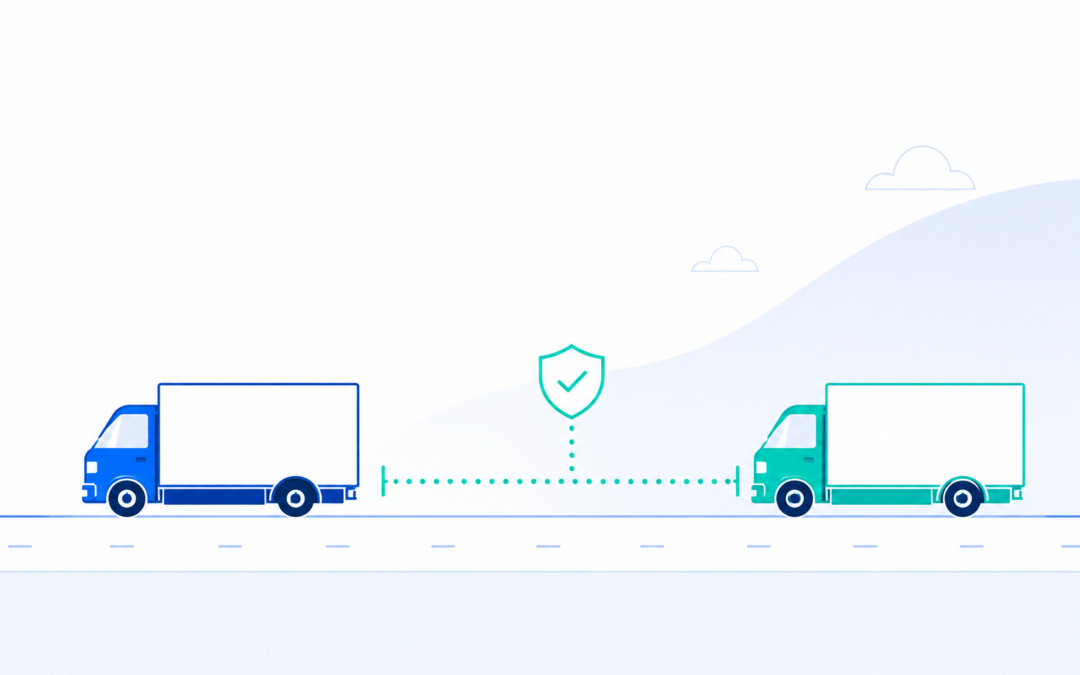
1. They prevent the crash before it happens. The moment that prevents a crash is the moment before the crash, not the moment after. Real-time in-cab alerts on following distance, hard braking, distracted driving, and speeding give drivers a chance to self-correct on the spot. For ready mix, that matters most on the rural and residential stretches where curves and pedestrians arrive without much warning.
2. They exonerate drivers when claims get filed. Ready mix drivers spend their days near vulnerable road users and active job sites. Claims happen. Some are legitimate. Many are not. Commercial auto premiums hit a record $0.102 per mile in 2024 according to the American Transportation Research Institute, the third straight year of increases. The median nuclear verdict reached $51 million in 2024, up from $21 million in 2020 (Marathon Strategies). Insurers expect to keep losing money on commercial auto through at least 2029 (S&P Global). Dual-facing footage closes false claims that would otherwise drag on for months, and creates an evidence package the insurer can act on quickly.
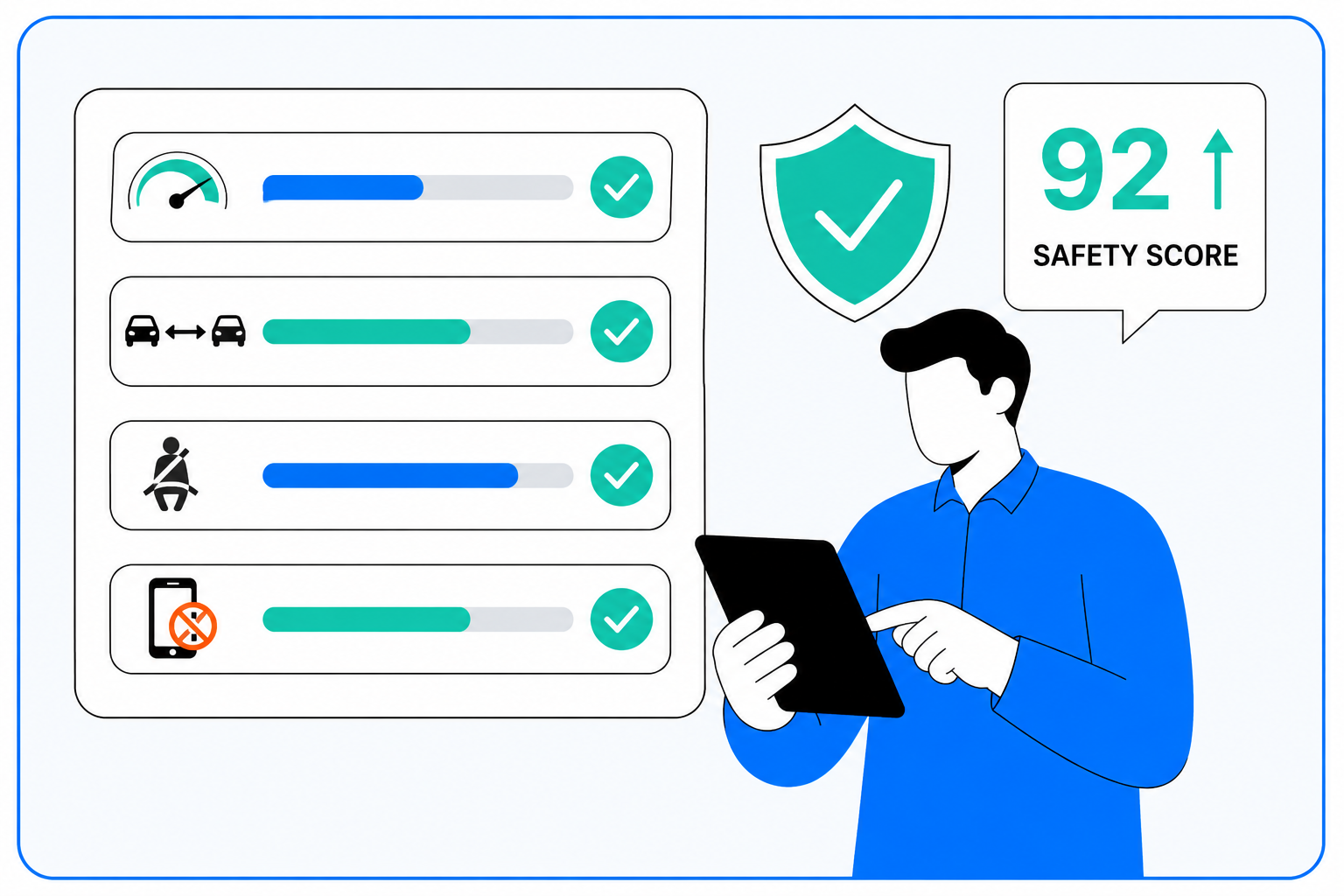
3. They make coaching faster, fairer, and trusted. Coaching only works when drivers trust it. Context-weighted AI scoring distinguishes a hard brake to avoid a pedestrian from a hard brake from tailgating. Drivers can see their own score in a mobile app and watch it climb when they self-correct. That visibility matters. The fastest way to lose a driver is to roll out cameras as surveillance. The fastest way to win them is to roll them out as protection.
4. They strengthen the renewal conversation. A documented safety program plus a lower loss ratio makes you a more attractive account at every renewal. Some carriers offer direct discounts for fleets running AI dash cams and structured safety programs. The bigger savings come from a loss ratio that compounds, renewal after renewal.
What to look for in an AI dash cam for ready mix
Not every system is built the same. Five questions worth asking any vendor:
100% drive-time analysis, or only flagged events?>
Many systems score the moments their camera happened to catch and ignore the rest. A fair scorecard needs the full drive, not the highlight reel. Ready mix routes shift between highways, residential streets, and active job sites in a single shift, and the full context matters.
Dual HD cameras with low-light coverage?
Road view and driver view, both in 1080p. Cameras that downgrade after sunset miss the fatigue and distraction events that matter most on early-morning pours and late-day finishes.
Alert accuracy and compound event detection?
A camera that throws false positives at every shadow loses driver trust on day one. Look for systems that hit near-99% alert accuracy and flag risky combinations like distraction plus tailgating or speeding plus hard braking, not just isolated events.
Positive recognition built into the scorecard?
A system that only tracks violations turns into surveillance. Look for scorecards that reward safe behavior, not just penalize risky behavior. That's how you keep drivers, not just monitor them.
Integrated with telematics, inspections, and maintenance?
AI dash cams that plug into your broader fleet platform make the whole safety program stronger. Standalone cameras leave the picture incomplete.
Where to start
The math on AI dash cams was settled years ago. The real question for most ready mix fleets is which system fits the way your trucks actually work.
IntelliShift’s AI Dash Cam is built for the maneuvers, routes, and conditions ready mix sees every day. Dual-facing cameras. Edge processing. Context-weighted scoring. And a single platform that ties video to telematics, inspections, and maintenance.